Table Of Contents
- What a one-page website is, and why it works so well for simple offers
- One-page website vs multi-page website, the pros and cons that matter most
- Who should use a one-page website, and when it is the smartest choice
- When a multi-page website makes more sense for your next stage of growth
- Ready to see what fits your business?
- FAQs
Have you ever scrolled through hundreds of website template options and seen choices like a One-Page Website, 5-page, or 10+ pages, then had no clue what to pick? There are plenty of options, but you do not need the “best” website format in general. You need the one that fits your business at its current stage and gives you room to grow over time.
That choice usually comes down to three things, how many offers you sell, how people make buying decisions, and how much trust-building content they need before they reach out. A simple site can convert well when your message is clear. A multi-page website can work better when your business needs more room for services, proof, and search traffic.
The smartest option is the one that matches how your clients move from interest to action.
What a one-page website is, and why it works so well for simple offers
If you’ve ever asked, “what is a one page website,” the answer is simple. It’s a site where the core message lives on one scrolling page instead of being split across many pages.
That page usually includes your headline, offer, proof, and call to action in one place. Visitors scroll instead of clicking through a menu. Because of that, the experience can feel fast and clear.
This format works well in 2026 because people are used to mobile-first browsing. More than 60% of web time now happens on phones, so scrolling feels normal. Attention is short, and people skim. If your offer is easy to understand, a one-page site can help them get the point quickly.
What visitors usually see on a one-page site
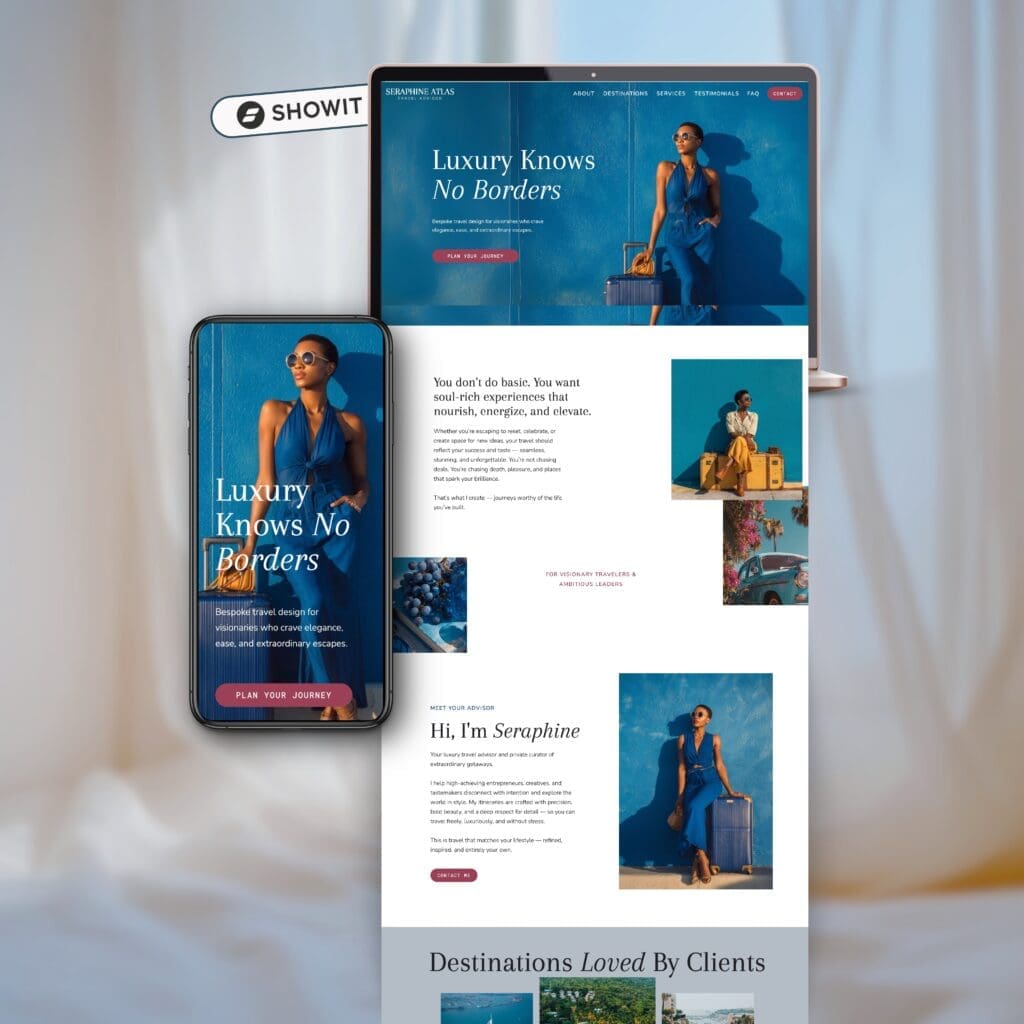
Most one-page websites follow a simple path from interest to action. The sections often included are:
- A clear hero section with your headline, brief value statement, and main call to action
- A section to highlight your mission or your ideal client’s pain points
- A services or offer section that explains what you do and who it’s for
- Testimonials or proof that reduce doubt
- A short about section that tells people who you help and why they should trust you
- An FAQ section that answers common concerns before they become objections
- A contact form, booking link, or inquiry button
This order matters because it mirrors how many service buyers think. First, they want clarity. Then they want proof. After that, they want an easy next step.
Why one-page websites can convert well when the offer is clear
One-page websites often work because they remove extra decisions. A visitor doesn’t have to choose where to click next. They keep scrolling, and the story unfolds in a set order.
That can help conversion when you have one main service, one main audience, and one main call to action. For example, if you want people to book a discovery call, apply for a program, or send an inquiry, one page can do that well.
Less choice often means less friction. However, this only works if the offer is already clear. If your message is broad or your services are mixed together, a one-page site starts to feel crowded fast.
One-page website vs multi-page website, the pros and cons that matter most
The real one page website vs multi page website decision has less to do with design trends and more to do with business structure. One format supports focus, while the other supports depth.
This quick comparison shows where each one tends to win.
| FACTOR | ONE-PAGE WEBSITE | MULTI-PAGE WEBSITE |
|---|---|---|
| Clarity | Strong for one offer and one next step | Better when you need separate paths |
| Ease of use | Fast to build and easy to browse on mobile | Easy to organize once content grows |
| Content depth | Limited space for detail | More room for proof, FAQs, and story |
| Search visibility | Best for a narrow topic | Better for multiple topics and queries |
| AI search discoverability | Weaker when content is thin | Stronger when pages answer specific questions |
| Growth | Can get cramped over time | Easier to expand as the business grows |
The takeaway is simple. Neither option is better by default. If your buyers need one clear action, one page can be enough. If they need options, proof, and detail, more pages usually help.
Where a one-page website shines, and where it starts to fall short
A one-page site shines when speed matters. You can launch faster, write less copy, and keep the visitor focused. That makes it useful for newer businesses, soft launches, and simple service models.
It also works well on mobile. People can scroll through your offer without opening menus or jumping between pages. That often creates a smooth first impression.
Still, the limits show up as soon as the business grows. If you add several services, many testimonials, long FAQs, or different audience types, the page can become heavy and hard to scan. What felt clean at first can start to feel packed.
Search visibility is another factor. One-page sites can do well for one core topic, but they give you fewer chances to show up for different searches. They also give AI-powered search fewer focused pages to pull from. If someone searches for a specific service, destination, or client problem, a single page may not give enough depth.
What a multi-page website does better for growing brands
A multi-page website gives each part of your business room to breathe. You can create a dedicated page for each service, a fuller about page, separate testimonial or case study pages, and helpful blog content.
That structure helps people find what fits them faster. It also gives you more room to build trust. If someone isn’t ready after reading your home page, they can keep exploring. They can read how you work, who you’ve helped, and what results people got.
This matters for longer sales processes. Coaches with premium offers, consultants with tailored packages, and travel advisors with destination-based services often need more than one page to support the sale.
Multi-page sites also tend to do better in search, including AI search experiences such as Google’s AI Overviews. Separate pages let you answer specific questions with more detail. That gives your site more ways to get found.
The tradeoff is simple. A multi-page site takes more planning, more copy, and more decision points for the visitor. If you build it poorly, people can get lost.
Who should use a one-page website, and when it is the smartest choice
If you’re wondering when to use a one page website, start with your sales process. The simpler the offer and the clearer the next step, the better this format tends to work.
This is also the right place to ask who needs a one-page site. In many cases, it’s the business owner who wants a clean launch without building a huge site before it’s needed.
Best fit for coaches and service providers with one main offer
A one-page site is often a strong fit for service providers with one signature offer. That could be a business coach selling one flagship program, a spiritual coach offering private sessions, a consultant with one package, or a travel advisor with one clear inquiry flow.
In these cases, the buyer doesn’t need a big content library. They need enough clarity and trust to take one next step. If the offer is easy to explain, one page can move them there.
Referrals also matter here. If most of your leads come from Instagram, email, podcasts, or word of mouth, people may already know why they’re interested. Your site doesn’t need to do all the warming up. It needs to confirm trust and make action easy.
A one-page site makes sense when speed and simplicity matter most
Sometimes the best website is the one you can launch this month.
If you’re starting a new business, testing an offer, or working with a limited budget, a one-page site can be a smart first move. You can get online fast, collect leads, and learn what people respond to before you build more.
This format also works well for soft launches. Instead of waiting until every service and page is perfect, you can publish a focused site now and expand later. That approach often beats months of delay.
A one-page site isn’t a lesser option. In the right context, it’s a strong one. It works best when your business model is simple and your message is tight.
When a multi-page website makes more sense for your next stage of growth
Growth changes what your website needs to do. Once your business has more offers, more content, or a longer decision cycle, one page can start holding you back.
At that point, your site needs to sort, guide, and educate, not only introduce.
Choose multi-page if you have several services, audiences, or offers
Separate pages help visitors find the right fit without wading through content that doesn’t apply to them.
For example, a coach may offer private coaching, a group program, and a course. A consultant may work with different industries. A travel advisor may plan honeymoons, family trips, and luxury itineraries. Each of those needs its own page.
That structure helps the reader self-sort. It also helps your message stay clear. Instead of squeezing every offer into one long page, you give each one space to explain the value, process, and next step.
Choose multi-page if trust, content, and search traffic are part of your strategy
A multi-page website makes more sense when content is part of how you attract leads. If you want to publish blog posts, answer common questions, share case studies, or host a podcast, you need pages that support that plan.
This also matters for search visibility. Traditional search and AI-powered search both reward useful, specific content. A service page for “leadership coaching for founders” gives more context than a short paragraph on a single long page. The same goes for destination pages for travel advisors or detailed FAQs for consultants.
Trust grows with detail. Pages for testimonials, brand story, results, and resources help buyers spend more time with your business before they reach out. For higher-ticket offers, that extra depth can lift lead quality.
Ready to see what fits your business?
Browse my one-page and multi-page website templates on Showit and Squarespace, and explore the demo links to see exactly how each one is structured. Every template is built to launch fast, look polished, and turn visitors into clients.
FAQs
Is a one-page website good for SEO in 2026?
A one-page website can rank well for one core topic, but it gives you fewer chances to show up in search. Each page on a site is a separate opportunity to answer a specific question. With only one page, you’re competing for one main keyword instead of many. If search traffic is part of your strategy, a multi-page or hybrid site usually performs better, especially in AI-powered search results that reward focused, detailed pages.
How do I know if I need a one-page or multi-page website?
Look at your offers and your sales process. If you sell one main service, have a short decision cycle, and get most of your leads from referrals or social media, a one-page site is often enough. If you have several services, different audiences, or rely on content and search to attract leads, a multi-page site will serve you better. When in doubt, a hybrid site gives you focus now and room to grow later.
Can a one-page website still look professional?
Yes. A one-page website can look just as polished as a larger site when the layout, copy, and visuals are done well. The key is clarity. A clean hero section, clear offer, strong proof, and one obvious call to action can feel more professional than a cluttered multi-page site. Many service providers, coaches, and travel businesses use one-page websites as their main business site with great results.
Is a one-page website cheaper than a multi-page website?
Usually, yes. A one-page site takes less time to design, write, and build, so the upfront cost is lower. You also save time on updates because everything lives in one place. That said, the real savings come from matching the format to your business. Paying for a large multi-page site you don’t need costs more in time and money than starting with one page and expanding later.
Can I switch from a one-page website to a multi-page website later?
Absolutely. Many service providers start with a one-page site and add pages as their business grows. A good template makes this easy. You can keep your home page focused while adding service pages, a blog, testimonials, or a shop when the time is right. Starting small doesn’t lock you in. It gives you a strong base to build on.
This post may contain affiliate links. If you make a purchase through these links, I may earn a small commission at no extra cost to you.


